
Selecting a Multi-tenancy Model for Startups
Multi-tenancy decisions shape margins, engineering velocity, and audit outcomes. Comparing silo, hybrid, and pooled models to match architecture with customer requirements.
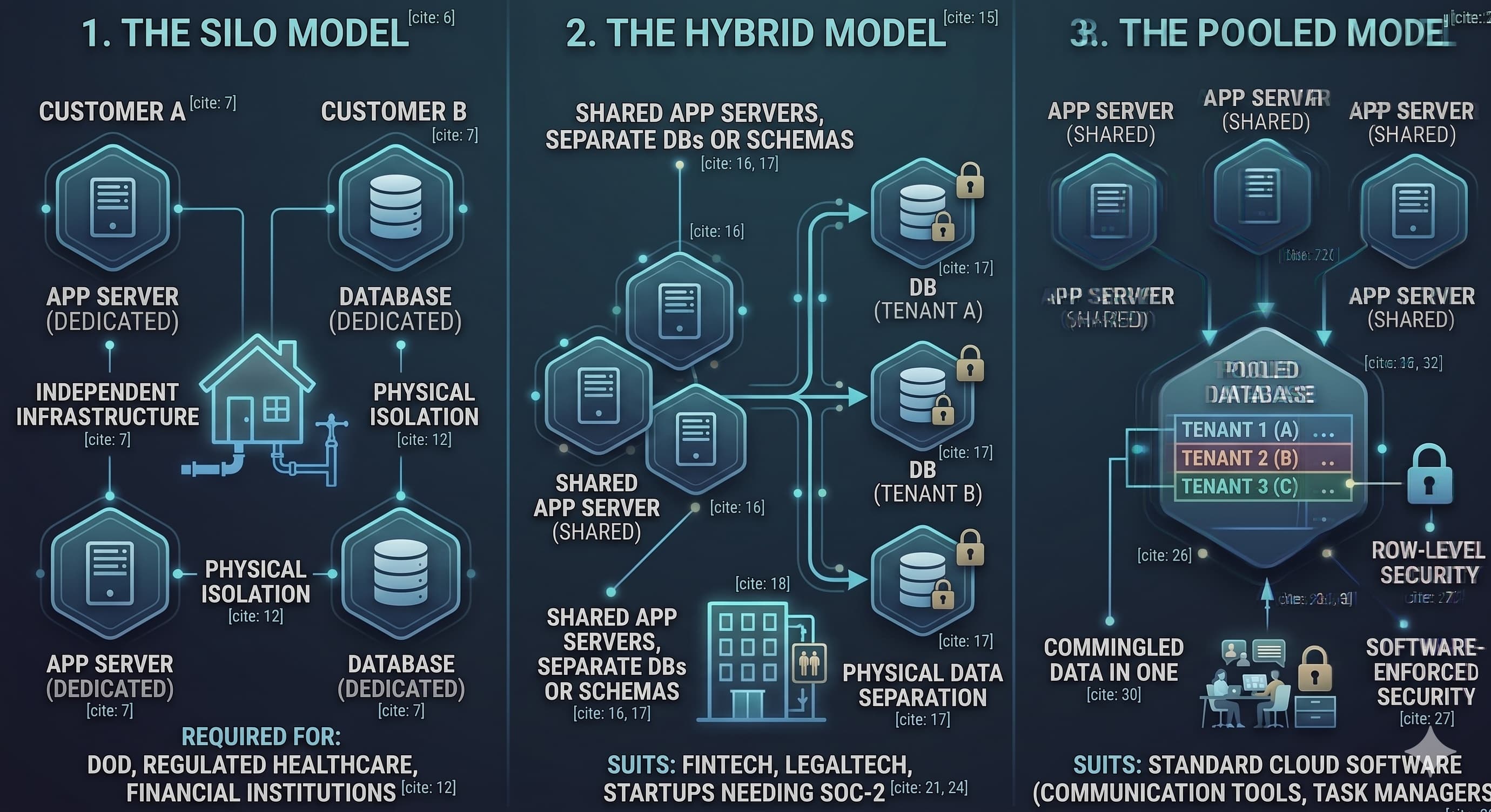
Building a cloud software company involves deciding how to store customer data. In cloud architecture, a customer is called a tenant. Multi-tenancy involves allowing multiple customers to share underlying computing resources to reduce server costs. Sharing resources introduces the risk of data bleeding from one customer to another. Deciding the depth of tenant isolation affects profit margins, engineering speed, and enterprise compliance audits. Tenancy architecture falls into three primary levels.
The Silo Model
In the silo model, each customer receives independent infrastructure. Customers utilize separate application servers and dedicated databases. This approach resembles separate houses with unconnected plumbing and separate entrances.
Opting for the silo model is unnecessary for standard B2B SaaS, consumer applications, or product-led growth startups. Using this model for marketing tools, small business CRMs, or analytics dashboards results in higher costs. Cloud hosting costs scale linearly with each new implementation, and software updates require engineers to update separate environments individually.
Selecting the silo model is required when selling to the Department of Defense, regulated healthcare networks, or financial institutions refusing shared infrastructure. Enterprise procurement teams demand dedicated instances because compliance frameworks prohibit their data from residing on shared hard drives. Building a silo requires the customer's annual contract value to cover the cost of hosting and maintaining the private environment.
The Hybrid Model
The hybrid model shares application servers among customers while separating data storage. Each tenant receives an isolated database or a dedicated schema within a database. This architecture functions like an apartment building where tenants share an elevator but maintain separate, locked apartments for their data.
Avoiding the hybrid model is appropriate for data with a low-risk profile and scaling to tens of thousands of users. Managing numerous separate databases or schemas introduces operational complexity. Building social apps, habit trackers, or productivity tools with this approach adds overhead.
Implementing the hybrid model suits FinTech, LegalTech, or mid-market healthcare tools. This architecture serves B2B startups handling sensitive data. It offers cost reductions from shared application servers while providing data isolation. Hackers exploiting an application flaw to access one customer's data cannot download another customer's data due to the physical separation of databases. Startups needing to pass a SOC-2 audit for B2B deals use this architecture.
The Pooled Model
The pooled model shares application servers and database tables among customers. Software code enforces security through row-level security, filtering data to show only rows assigned to a specific customer ID. This setup mirrors a co-working space where individuals share tables and filing cabinets, relying on application logic to maintain privacy.
Avoiding the pooled model is necessary when a code bug could lead to a privacy breach. Commingling data in the same database table risks exposing one client's data to another if developers omit a specific tenant ID filter in a database query. Regulated enterprise clients reject this architecture during vendor risk assessments.
Utilizing the pooled model fits standard cloud software. Building communication tools, task managers, or e-commerce platforms with the pooled model supports scaling and profit margins. This architecture reduces running costs, speeds up updates, and simplifies backups. It permits onboarding new users without provisioning new databases.
Changing Tenancy Models
Altering a multi-tenancy model later is difficult. Transitioning from a pooled model to a hybrid model requires rewriting the database architecture, modifying the authentication logic, and pausing product feature development.
Planning a startup involves examining the regulatory requirements of the target customer. Selling to regulated hospitals or banks requires selecting the hybrid or silo model initially. Seeking consumer scale involves using the pooled model and enforcing code-level security. Identifying the tenant requirements precedes infrastructure development.