
Calling the Agency Bluff: How California’s AB 692 Killed the "No-Hire" Penalty
California's AB 692 voids the "stay-or-pay" clauses agencies use to lock in engineers. Here's why their six-figure demand letters are running on dated case law.
Disclaimer: I am a digital product creator and fractional CPO/CTO, not a lawyer. The information in this article is for educational and informational purposes only and does not constitute legal advice. If you are navigating a complex vendor agreement or employment restriction, please consult with qualified legal counsel in your jurisdiction.
In yesterday's post, we unpacked the fragile economics of the traditional software development agency and how they use aggressive "no-hire" clauses and unreasonable liquidated damages to lock in your startup's capital and talent. We looked at the psychological warfare of the Master Services Agreement (MSA) and how you can negotiate your way out of it.
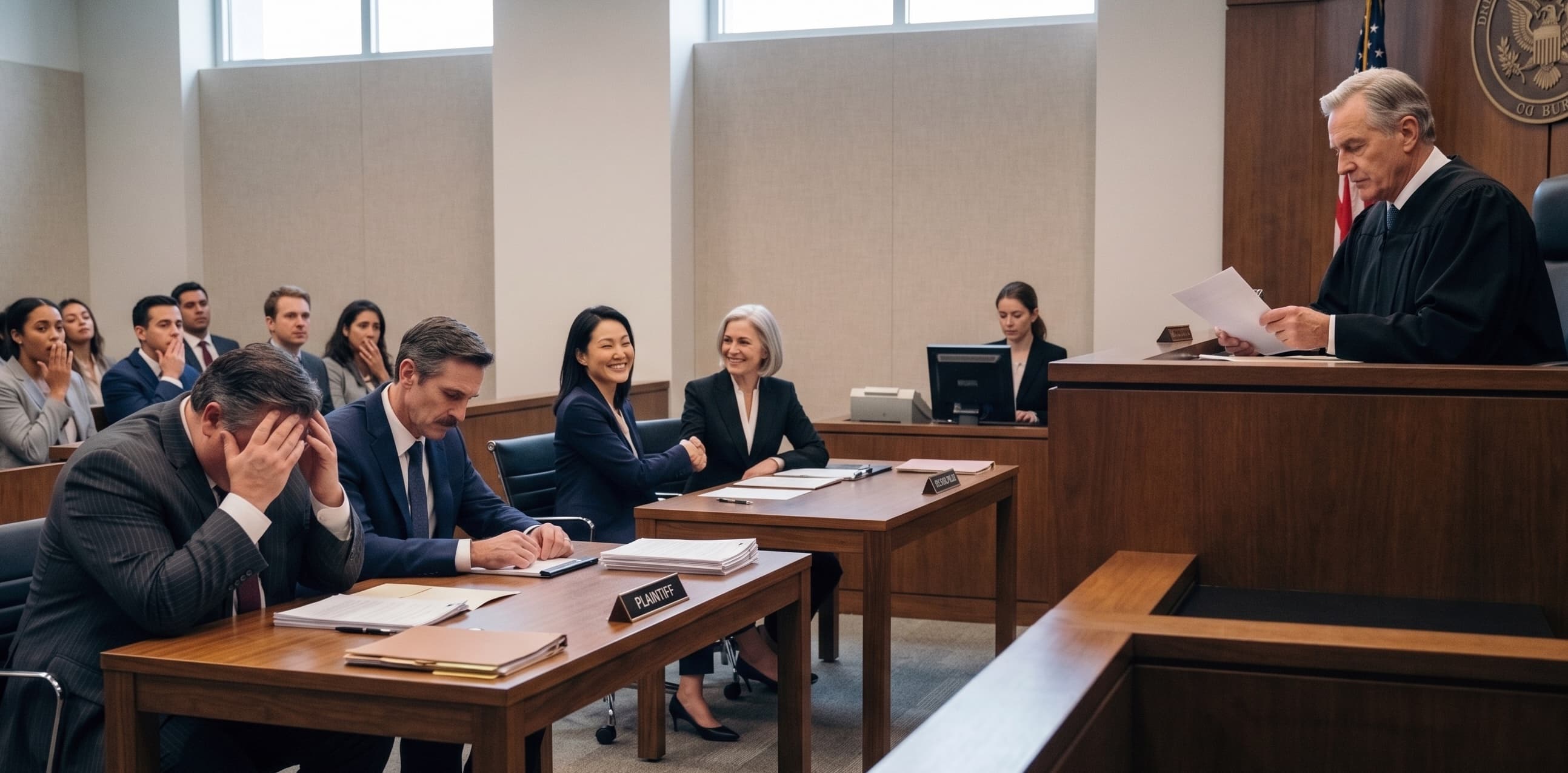
But what happens if negotiations fail? What if you hire the lead engineer anyway, or cancel the contract early, and the agency's lawyers send a demand letter citing a terrifying list of past court victories? Does the agency have the leverage to win in court?
Agencies using these clauses present them as legally bulletproof. They cite case law to argue their penalty clauses are enforceable. Founders operating in California should recognize that the agency's legal playbook is dated, much like its software development model.
The actual data, the bluff being run, and the 2026 laws together shift leverage back toward founders and builders.
The Ghost of 2021: The Agency's Favorite Bluff
If an agency threatens you today, it will almost certainly cite data and case law from the early 2020s.
Historically, agencies relied heavily on California Civil Code Section 1671(b), which presumed that liquidated damages in commercial B2B contracts were valid. They will proudly point to a 2021 empirical study showing that California courts enforced these commercial clauses at 57.7%, far higher than even in notoriously pro-business states like New York.
They will also cite cases such as the 2021 Springboard Solutions decision, in which a California appellate court ordered a company to pay a $308,626 placement fee to a staffing agency after hiring 33 of its contractors.
The $308,626 judgment was the aggregate total for all 33 workers, meaning the legally enforceable fee was only about $9,350 per person. Agencies cite the six-figure top-line number from this case to justify a $250,000 penalty on a single engineer. It is a calculated bluff, comparing a standard administrative temp buyout to a punitive hostage fee.
When the agency's lawyer sends you a cease-and-desist letter, these are the statistics and cases they cite when pressuring you toward a settlement. They want you to believe that because you signed a commercial B2B contract, California's famous worker protections do not apply to you.
Here is what they will not tell you: The legal foundation they cite no longer holds under current California law.
The 2026 Reality: Assembly Bill 692
The California legislature recognized that agencies were using these "commercial contracts" and "replacement fees" as a backdoor to bypass the state's absolute ban on non-competes. The legislature found that these B2B penalties tied workers to agencies and limited startup hiring.
As of January 1, 2026, Assembly Bill 692 took effect, banning "stay-or-pay" contracts. on what are known as "stay-or-pay" contracts.
AB 692 voids any contract that imposes a penalty on a worker or restricts their mobility upon termination of a work relationship. And the law's definition of prohibited costs specifically targets the agency playbook, explicitly outlawing "replacement hire fees... replacement fees, quit fees... [and] liquidated damages."
If an agency charges a "conversion fee" or "liquidated damage" today to prevent you from hiring an engineer, they aren't just relying on an unenforceable clause; they are violating current California law. In fact, AB 692 gives workers and their representatives a private right of action, allowing them to sue the enforcing company for a mandatory $5,000 penalty per violation, plus attorneys' fees.
The Death of the "Price Tag" Strategy
Even outside of the new AB 692 protections, California courts have grown increasingly hostile to the agency "price tag" strategy.
Agencies used to argue that a $250,000 no-hire fee wasn't a non-compete; it was just the "price" of hiring the worker. Under California's Business and Professions Code Section 16600 (and the strengthened 16600.5), courts now examine the effect of a clause rather than its wording alone.
If a financial penalty is so high that it effectively prevents a worker from being hired or freely moving between companies, courts routinely rule that it is a de facto non-compete and strike it down as void. If the fee bears no logical relationship to the agency's recruiting costs, it is an illegal penalty.
The Takeaway: Stepping Out of Their Game
The agencies are caught in a trap of their own making. They are clinging to a "butts in seats" business model, protected by legal templates that California courts and legislators are dismantling through rulings and statutes like AB 692.
The greatest deterrent to agency litigation may be the math and the market, not the law.
The startup ecosystem is small and networked. Founders talk. Venture capitalists share vendor warnings in private Slack channels. The moment an agency becomes known as the shop that sues its own clients and handcuffs its engineers, its referral pipeline freezes. Word-of-mouth is a development agency's lifeblood, and litigiousness is a fatal brand association.
The ROI of this legal aggression is typically negative. Even if an agency successfully bluffs a founder into a settlement, that settlement is usually just a fraction of the initial six-figure demand. Once the agency subtracts the tens of thousands of dollars spent on their own legal counsel to draft the threats, file the briefs, and negotiate the terms, they are left with pennies on the dollar. They lose the client, the engineer, and their reputation in the market for a net-zero financial gain. It is a hollow victory. They won the battle, but lost the war.
The leverage belongs to the founders who understand the current landscape. The leverage sits with founders building on modern AI-native tools, working with frictionless vendor partnerships, and leaving restrictive contracts behind. And those people who still used them in the past belong there.